“What the work of art looks like isn’t too important. It has to look like something if it has a physical form. No matter what form it may finally have it must begin with an idea. It is the process of conception and realization with which the artist is concerned.”
— Sol LeWitt
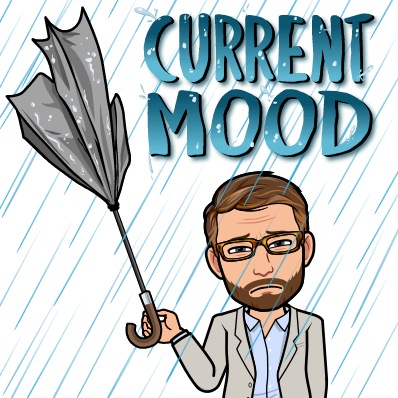
Oh, if it were so easy to take this approach to life. Instead, I tend to judge myself not by a “process of conception and realization” but by thinking I’m a finished product. By the way, this is my perspective; I don’t claim to speak for anyone here.
My feelings of failure come from comparisons to others and the preconceived ideals I’ve created for myself. When I get to a low place, where my emotional shields are down, and self-pity takes over, I judge myself against how I perceive others to be, not as they are with their flaws and warts, but their perfection that lives in my skewed reality. Those feelings of envy only consider perceptions that justify my pity party, and I ride the out-of-control emotional roller coaster.
As a person who’s a bit of a dreamer, I often set up the dangerous constructs of “when I get to X, it will feel like Y,” then only to find that when I get to X, it’s a bit like Clark Griswold arriving at Wally World. Soon, I’m chasing the John Candy security guard around my thoughts, wondering why Y doesn’t feel like I imagined, all the while discounting the process that got me to X in the first place, which in all likelihood, is an excellent place to be, and alienating those to which I’m closest.
Here’s an example: In my twenties, I imagined that when I got to 50, all my problems would disappear. In my imagination, there’d be no more stress about work, bills, and relationships, just the bliss of having achieved 1/20th of a millennium and all the platinum club memberships of life that go along. That ideal is the creation of a person without a fully developed pre-frontal cortex, as most of us are in our early twenties. Why would I hold that anticipation up as a goal to achieve without the context and wisdom accrued in the thirty years between 20 and 50? I certainly shouldn’t. For me, being 50 is stressful. Renee and I are dealing with fears about our adult children, aging parents, our next steps, and the care of two homes 90 minutes apart, one of which is 130 years old. I couldn’t imagine these items in the early 90s, and my naive self enjoyed the dopamine hit of that daydream.
If the above items are the main course, the non-logical and emotional side items are the fear of disappointing others, the fear of disappointing myself, and the worry that my best years are behind me. If life is like drinking a milkshake, hitting 50 is when you realize, “crap, I’ve already plowed through half this thing and didn’t even realize it!” Then you slow down and try to enjoy what’s left while anticipating air in the straw that signals the inevitable. Then you’re left with savoring what’s left while, at the same time, kicking yourself for not paying attention at the beginning.
How do I work my way out of this? Honest self-assessment. I find a quiet place with my journal, often outside, and try to run an honest diagnostic. Taking stock of progress and setbacks while filtering through the lens of my values affords me as transparent a picture of myself as possible. I try neither to sugarcoat nor to flail my arms around in a panic but to be as logical as possible. Seneca says, “Above all, it is necessary for a person to have a true self-estimate, for we commonly think we can do more than we really can.”
And I talk to Renee. She loves me enough to be honest with me, and having that external perspective leads to progress. In the quotation at the beginning, I learned from her, and she understands my flaws, strengths, and where I want to be. I can count on her to give me honest feedback that will allow me to grow. She and I talk about what is and what is not in our control and being able to recognize that limits the number of items about which we can worry. She and I also talk about our role models and what we can glean from them, whether it’s someone we know or someone we only know through reading about them. Those role models help to put a face on the character compass points and serve as inspiration. After all, if they can, why not us?
-David Aydelott
 Our What's Next